Can You Really Use a Golf Simulator Outdoors?
You can absolutely run a golf simulator outdoors, as long as you choose the right launch monitor, hitting area, and some protection from sun and weather.
Outdoor simulators are ideal if you:
- Don’t have enough space inside for a full enclosure.
- Want a backyard or patio setup for family and friends.
- Prefer hitting off real grass or a sturdy mat under open sky.
If you mostly care about practice and data, a launch monitor, net, and mat is enough. If you want full simulator golf with courses and big-screen visuals, you’ll add an outdoor golf simulator enclosure and projector to your setup.
| Launch monitor type | Tech type | Best outdoor use case | Models | Typical price range* | Notes for outdoor golf simulator setups |
|---|---|---|---|---|---|
| Budget personal radar | Radar | Backyard net and mat practice | Flightscope Mevo or Garmin Approach R10 | Under ~$1,000 | Needs depth behind and in front of ball, excellent value when paired with simple apps. |
| Hybrid radar/camera | Hybrid | Outdoor practice plus course play on tablet/TV | Full Swing Kit | Around ~$4,000 | Designed around outdoor use and works well with return nets and DIY outdoor golf simulator builds. |
| Mid-tier radar | Radar | Full outdoor golf simulator enclosure or range | Mevo Gen 2 | ~$1,200–$3,500 | Strong data set with starter sim software packs, ideal with 16+ ft of depth. |
| Mid-tier camera | Camera | Covered patio or garage door open bays | SkyTrak+ or Uneekor EYE MINI Lite | ~$3,000+ | High accuracy in tighter spaces, pairs well with screens and smaller enclosures. |
| Premium camera | Camera | Patio studio or indoor/outdoor hybrid builds | Garmin Approach R50 or Foresight GC3 | $5,000+ | Tour-grade accuracy, best pick if you want a long-term studio monitor. |
*Price ranges are approximate and depend on current bundles and software plans.
Outdoor Golf Simulator Buyer’s Checklist
1. Space and Ceiling Height
- Height: 8–9 ft minimum so you’re not worried about clipping the ceiling.
- Width: 10–12 ft so you can center the hitting area and catch toe/heel strikes.
- Depth: 15–16 ft if you’re using a radar-based unit that sits behind the ball (like Garmin R10 or Mevo+), and less if you’re using a camera unit that sits beside the ball (like Bushnell Launch Pro or GC3).
Backyard outdoor golf simulators have an advantage over garages because you’re rarely limited by width and depth, only by height and the direction you can safely hit.
2. Weather, Sunlight, and Durability
Outdoor gear takes more abuse than anything in a basement or spare room.
- Nets and basic enclosures handle weather better than projectors and electronics.
- If your setup isn’t under a roof, bring launch monitors, laptops, and projectors inside after each session.
- Direct sun can interfere with some cameras and wash out projected images, so shade, pop-up tents, or dusk/night sessions help a lot.
3. Radar vs Camera for Outdoor Use
Understanding launch monitor tech is key for any golf simulator outdoor build.
- Radar (Doppler) – Sits behind you and tracks the full ball flight; performs best in open outdoor spaces. Examples include compact radar-based personal launch monitors.
- Camera / Photometric – Sits beside or in front of the ball and measures impact; fantastic indoors and very good outdoors when lighting is consistent. Examples include consumer and professional camera-based units.
Simple rule of thumb:
- If you have lots of depth and open air, lean radar.
- If space is tight or you are in a garage-door-open setup, lean camera or hybrid.
Best Outdoor Golf Simulators by Budget
These outdoor golf simulator ideas are grouped by price so you can see what’s realistic for your situation.
Under $1,000 – Backyard Net Starter
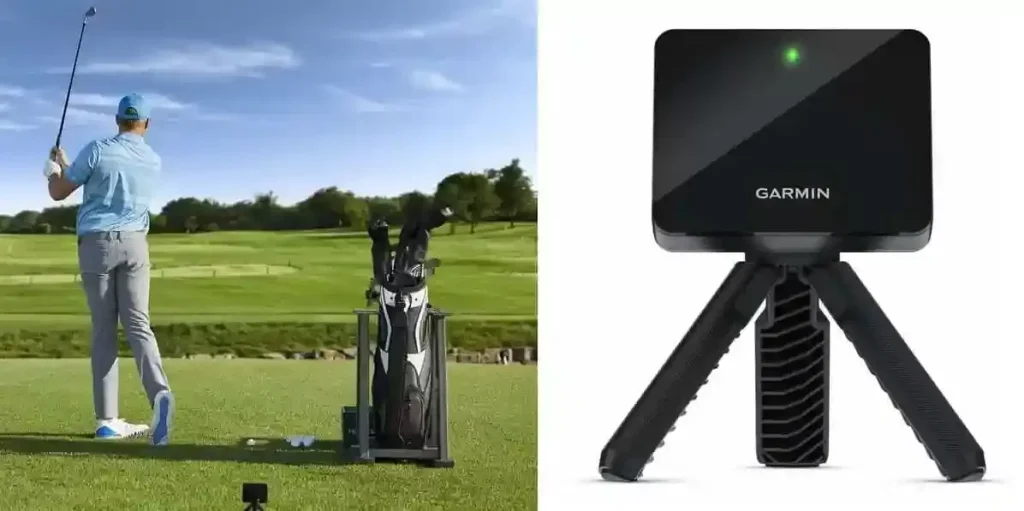
This tier is perfect if you want to stop beating balls at the range and start getting real numbers at home without a huge investment.
What you’ll use
- Portable hitting net.
- 4×5 or 5×5 hitting mat.
- Entry-level launch monitor with phone/tablet app.
Why this works
Radar-based budget units typically shine outside because they have more room to track ball flight, and pairing them with a simple net and mat gives you carry distance, ball speed, and dispersion patterns without worrying about projectors or enclosures.
$1,000–$3,000 – Serious Practice & Casual Sim Rounds
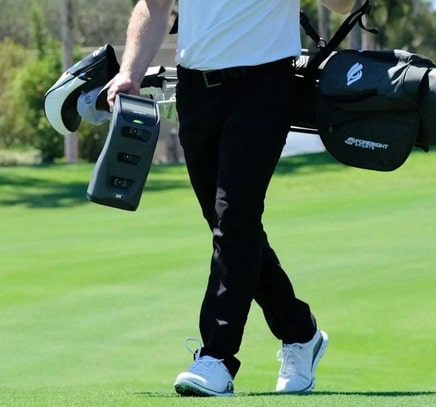
This range opens up more accurate launch monitors, better nets, and entry-level sim software.
What you’ll use
- Mid-tier personal launch monitor (including hybrid camera/radar options).
- Premium net with side wings.
- Quality stance mat.
- Optional entry-level simulator software for basic course play.
Why this works
Hybrid and mid-level radar units in this price band are designed to shine outside, often supporting 20,000+ courses or integration with major software platforms, giving you both range practice and simulated rounds from the same backyard outdoor golf simulator setup.
$3,000–$8,000 – Hybrid Indoor/Outdoor Simulator Setup
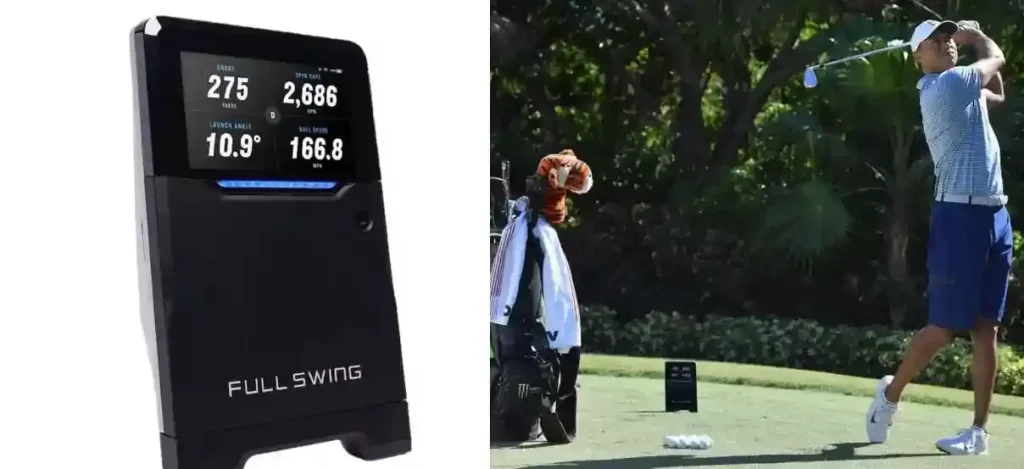
Now you’re moving from cheap practice to a serious outdoor golf simulator that can still be rolled inside or set up under cover.
What you’ll use
- Upper mid-tier radar or camera launch monitor.
- Full-height net or basic enclosure.
- Sturdy hitting mat, possibly with stance and hitting sections.
- Entry to mid-tier simulator software with multiple courses.
Why this works
Radar-based units at this level include more club data and often bundle in simulator software, making them excellent for full outdoor golf simulator enclosures where you can see your ball fly in real space while also seeing a virtual shot on screen.
Camera-based units in this price range deliver near-studio accuracy and are more forgiving when ceiling height and depth are limited, making them ideal for garage-door-open or covered patio builds.
$8,000+ – Backyard Golf Simulator Studio
If you want the best outdoor golf simulator experience and care about numbers as much as fun, premium launch monitors and a proper enclosure come into play.
What you’ll use
- Professional-grade camera launch monitor.
- Full simulator enclosure with impact screen and side/ceiling panels.
- Bright short-throw projector.
- High-end hitting mat or modular hitting strip system.
These devices offer tour-level accuracy and are flexible between indoor hitting bays and covered-patio enclosures, making them a strong choice if you want a “forever” launch monitor and a showpiece backyard build.
Nets, Mats, and Outdoor Golf Simulator Enclosures
Even the best outdoor golf simulator relies on the basics: a safe catching surface, a comfortable hitting surface, and enough containment to keep shots on your property.
When a Simple Net Is the Smarter Play
For many golfers, an outdoor golf simulator enclosure is simply a sturdy net with side wings.
- It is cheaper than a full frame and screen.
- It is easier to move or store between sessions.
- It is more forgiving in bad weather because there is less fabric and no projector involved.
Pairing a solid net with a personal launch monitor gives you most of the feedback you need without worrying about big-screen visuals, which is perfect for diy outdoor golf simulator setups.
Choosing an Outdoor Hitting Mat
You will hit thousands of balls off the mat you choose, so it has to protect your joints and feel realistic.
Look for:
- Thick base or built-in padding to soften impact on concrete or patio pavers.
- Realistic turf that lets the club enter and exit without bouncing or grabbing excessively.
- A hitting surface that can hold a real tee or accept replaceable hitting strips.
A good mat is what separates a fun outdoor golf simulator from one that hurts your wrists and back.
Screens and Full Enclosures Outside
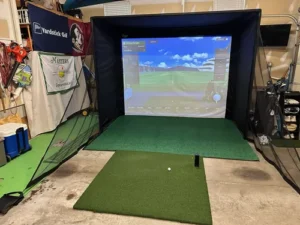
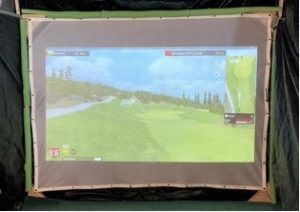
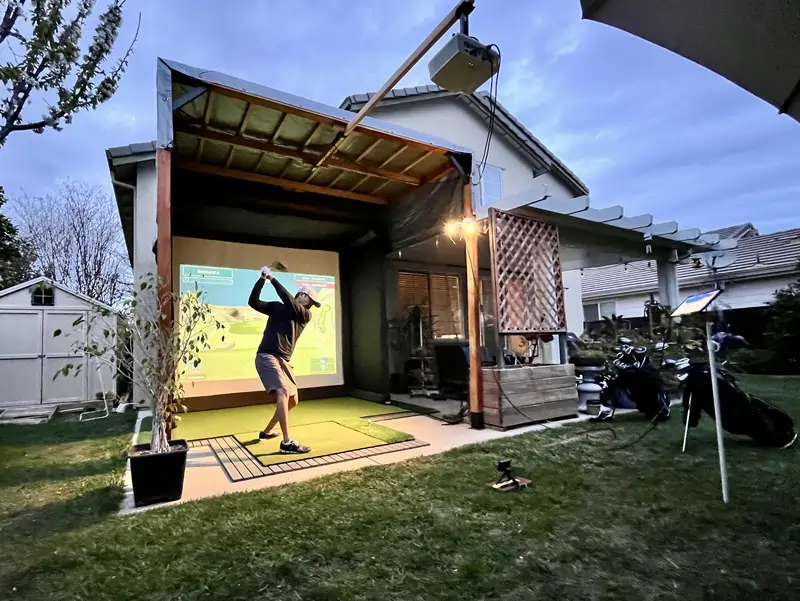
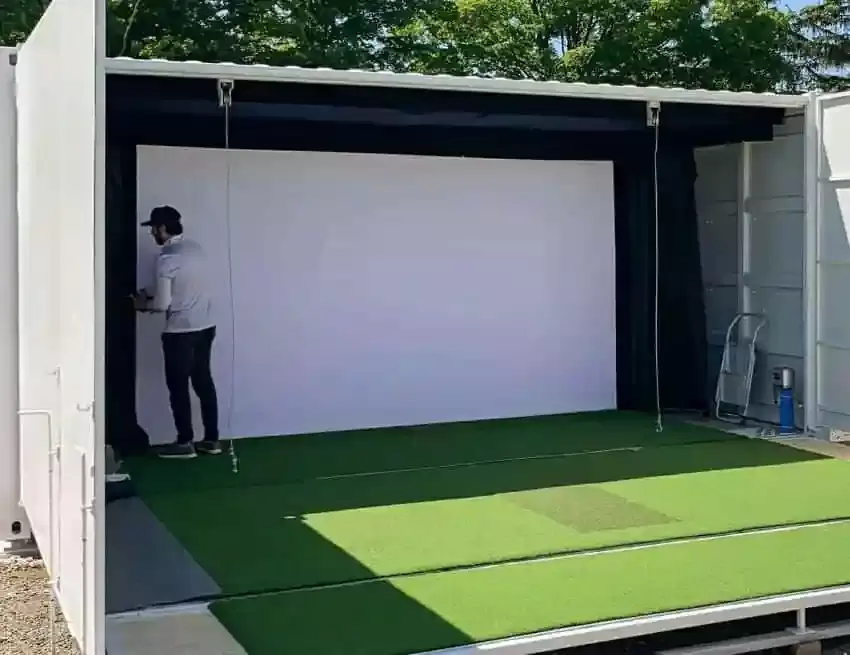
A full outdoor golf simulator enclosure with an impact screen and projector is the closest you can get to a commercial studio in your backyard.
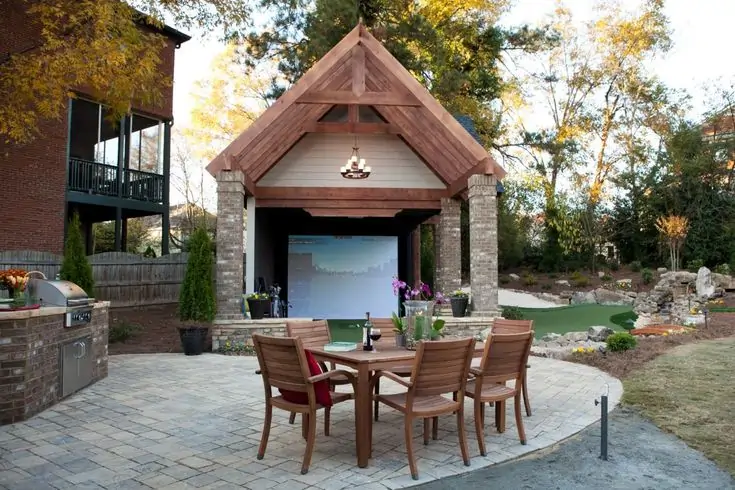
- It works best under a roof: covered patio, pergola with panels, or under a deck.
- A bright projector, around 4,000 lumens or more, is important to fight ambient light.
- Side and ceiling panels catch wild shots and keep balls away from windows, fences, and neighbors.
If you like the idea of playing full 18-hole rounds with friends, this style of enclosure is where the backyard outdoor golf simulator really starts to feel like the real thing.
Sample Backyard Outdoor Golf Simulator Setups
These examples help you picture what is realistic for your own home.
1. Roll-Out Backyard Practice Setup (Budget DIY)
- Launch monitor: compact personal radar unit.
- Net: portable return net that can fold up and store in the garage.
- Mat: 4×5 stance mat that rolls for storage.
- Display: phone or tablet on a tripod behind the hitting area.
Roll the mat and net out when you are ready to practice, then store everything when you are done. This is the simplest diy outdoor golf simulator and usually comes in under roughly $2,000 depending on the launch monitor.
2. Covered Patio “Entertainment Bay”
- Launch monitor: mid-tier radar or camera model.
- Enclosure: 8–10 ft wide impact screen with side and top panels.
- Projector: short-throw ceiling or floor-mounted unit.
- Seating: bar stools or a small sofa for friends and family.
When you’re not running your outdoor golf simulator, this bay doubles as a giant screen for sports, movies, or kids’ games, which makes it easier to justify the spend.
3. Garage Door Open / Driveway Flex Setup
If you already have or plan to build a garage simulator, you can still enjoy an outdoor feel.
- Use camera-based units in garages with limited depth because they do not need as much space behind the ball.
- Hit with the garage door open toward a net or screen slightly outside the door, gaining extra height and safety while still using indoor power outlets and storage.
This type of setup is an easy bridge between a traditional home golf simulator and a true backyard outdoor golf simulator.
Outdoor Golf Simulator Software Options
The hardware makes the shots possible, but the golf simulator software delivers courses, challenges, and games that keep you engaged.
E6 Connect
E6 Connect is often bundled in starter form with certain radar-based launch monitors and includes driving ranges, skills challenges, and a set of high-quality courses.
It runs well on modern laptops and some tablets, making it a solid choice for outdoor golf simulator setups where you may not want a full desktop PC in the mix.
GSPro and TGC 2019
GSPro and TGC 2019 are highly regarded for realistic ball physics and large course libraries.
They are great options if you want your backyard outdoor golf simulator to support league play, online competition, and long-term variety so you do not get bored after a few weeks.
Awesome Golf and Other Fun-Focused Apps
Fun-focused apps like Awesome Golf pair nicely with personal launch monitors and emphasize games, targets, and kids’ modes.
They are perfect for backyard parties where not everyone is a low handicap but everyone wants to swing and see a rewarding ball flight on screen.
Safety, Noise, and Neighbor-Friendly Tips
A good outdoor golf simulator setup also has to be safe and reasonably quiet.
- Use side barrier nets or wings if you are hitting toward houses, cars, or fences.
- Consider softer or limited-flight balls if you’re nervous about mishits, especially when guests are playing.
- Reduce noise by adding rubber tiles or turf under your mat and avoiding late-night sessions with woods and drivers.
Some launch monitors require special balls or markings for best spin accuracy, so be sure to check those requirements before you stock up on new balls.
Budget Planning and Upgrade Path
Most homeowners do not need to buy a full-blown backyard golf simulator on day one.
A smart approach is:
- Start with a launch monitor, mat, and net to see how often you actually use the setup.
- Add an outdoor golf simulator enclosure once you know the best direction and location.
- Add a projector, screen upgrades, and seating when you are ready to turn it into a true backyard entertainment space.
This lets you spread the cost over time and still get most of the benefits of an outdoor golf simulator from day one.
FAQs About Outdoor Golf Simulators
Can I leave my outdoor golf simulator outside year-round?
You can leave heavy-duty nets and enclosures outside in many climates, but always bring electronics like launch monitors, laptops, and projectors indoors and use covers or storage during harsh weather.
How much space do I need for an outdoor golf simulator?
Most golfers are comfortable with at least 8–9 ft of height, 10 ft of width, and 15–16 ft of depth, especially when using radar units that sit behind the ball.
Is radar better than camera for an outdoor golf simulator?
Radar units often perform best with more ball-flight space outdoors, while camera units are stronger choices in tighter spaces like garages or shallow patios.
Can I use a projector in daylight?
You can use a projector during the day, but direct sun will wash out the image; shade, covered patios, and dusk sessions combined with a bright projector give the best results.
What is the cheapest way to build a backyard outdoor golf simulator?
Combine a budget-friendly personal launch monitor with a quality net and mat, use your phone or tablet as the display, and upgrade later with an enclosure and projector as budget allows.

This website is a participant in the Amazon Services LLC Associates Program, an affiliate advertising program designed to provide a way for websites to earn advertising revenues by advertising and linking to Amazon.com. Some of the links on this page are affiliate links. This means that, at zero cost to you, I will earn an affiliate commission if you click through the link and finalize a purchase.