Golf is often called a “low-impact” sport—but any golfer who has walked 18 holes knows that soreness after golf is very real. Many golfers finish a round feeling great, only to wake up the next morning with a sore back, tight hips, or aching elbows.
If you’re dealing with soreness after golf, you’re not alone. Golf is a repetitive, rotational sport that puts stress on muscles and joints that many people don’t use much in everyday life. The good news? With the right warm-up, recovery routine, and a few smart habits, you can significantly reduce soreness and recover faster between rounds.
In this guide, we’ll break down:
- Where golfers get sore the most
- Why soreness happens after golf
- What to do before a round to prevent soreness
- What to do after a round to recover faster
- Tools and products that can help with recovery
Let’s get into it.
Where Most Golfers Get Sore
Golf uses your entire body, but the most common areas for soreness after golf are:
- Lower back
- Shoulders
- Elbows (golfer’s elbow / tennis elbow)
- Hips
- Hamstrings
- Calves
- Forearms
Why These Areas Get Sore
Low Back: The golf swing involves rotation, side bending, and extension—all of which put stress on the lumbar spine. If you have limited hip mobility or weak core muscles, your lower back often compensates, leading to soreness after golf.
Shoulders: Your shoulders control the club through the backswing and follow-through. Poor thoracic mobility or overuse can lead to shoulder and rotator cuff soreness.
Elbows: Grip pressure and repeated swings can irritate the tendons around the elbow, leading to golfer’s elbow—one of the most common golf injuries.
Hips, Quads, Hamstrings, and Calves: These muscles stabilize your swing and handle all the walking during a round. If you walk the course, you can easily log 5–7 miles, which explains the leg soreness many golfers feel the next day.
Why You Feel Soreness After Golf
Soreness after golf usually comes from three main things:
1. Repetitive swinging
2. Walking long distances
3. Lack of warm-up or mobility
4. Dehydration
5. Muscle fatigue
Most soreness after golf is a form of DOMS (Delayed Onset Muscle Soreness), which appears 12–48 hours after activity. This is especially common if:
- You played multiple days in a row
- You walked instead of rode
- You haven’t played in a while
- You practiced a lot (range sessions can be worse than playing)
How to Prevent Soreness Before a Round of Golf
If you want to reduce soreness after golf, what you do before the round matters just as much as what you do after.
Here’s a simple pre-round routine that makes a huge difference:
Before your round…
Walk for a few minutes first. If you’re going straight from your car to the cart to the first tee box, you’re not warmed up. Walking for even a few minutes gets your heart rate up and your joints moving before you swing.
Do dynamic mobility work. Identify your problem areas, and develop a warmup plan that isolates those muscles. Focus on trunk twists, hip rotations, leg swings, arm circles, and wrist/elbow rotations.
Take a few practice swings at 50% to 75% effort. There’s nothing that strains your muscles more than going from zero to 100. This helps your nervous system and muscles ramp up gradually instead of going straight to full speed.
Hit a few short wedges first. Again, we don’t want to go full force right off the bat. Starting with easier shots helps coordinate timing and gradually warms the body.
Activate the big golf muscles. Another way to avoid soreness? Hit the gym! Core, glutes, shoulders, lats, and hips matter because they help you rotate and stabilize through the swing. The stronger those are, the less soreness you’ll feel.
Hydrate before teeing off. Getting in your 3.7 liters is just as important for golf as it is your overall health. Coming in under-hydrated can make soreness and fatigue worse later.
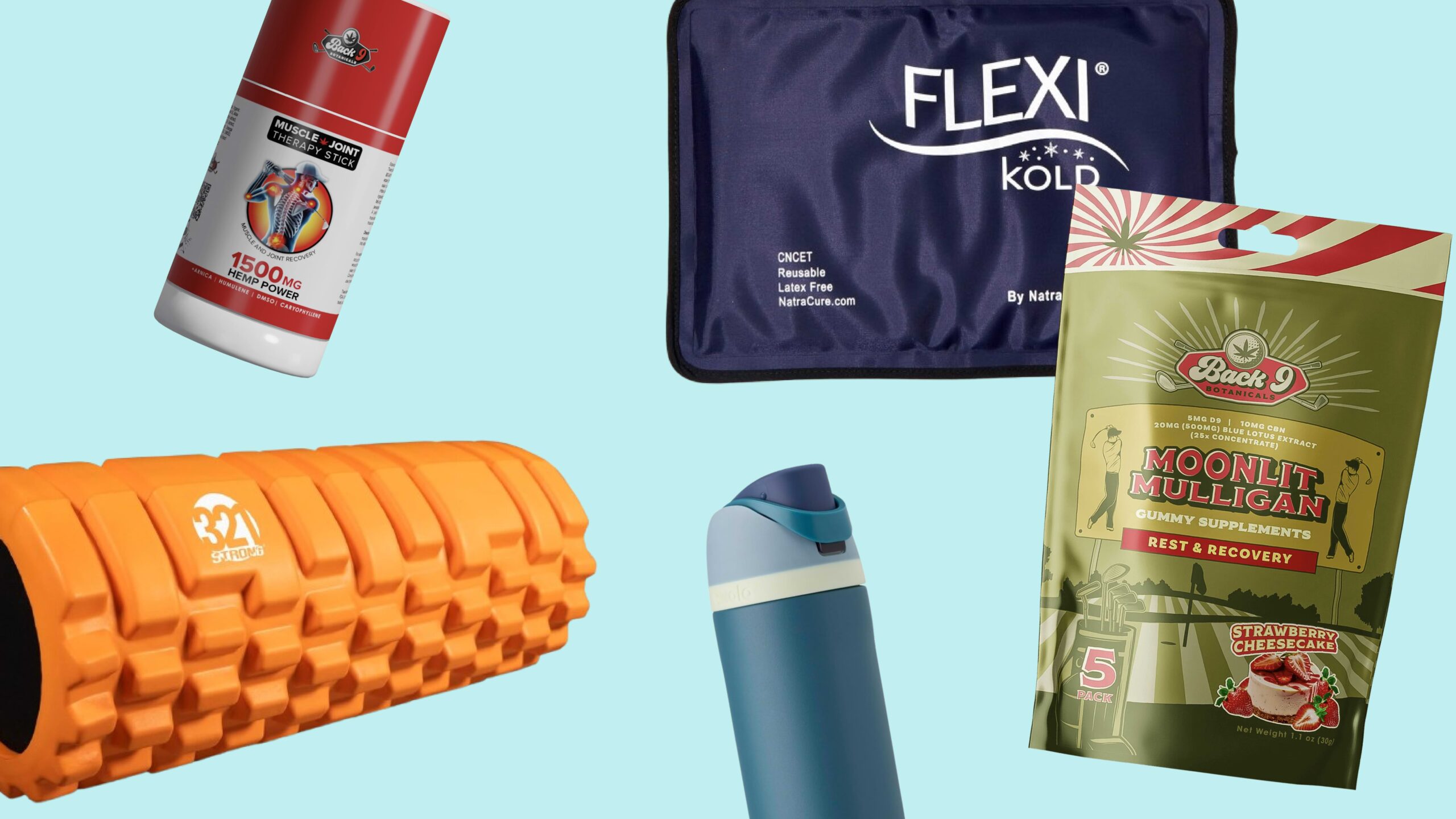
Micro-dosing. Some golfers use hemp-derived products or CBD to help manage inflammation, muscle soreness, and focus during a round. Back 9 Botanicals gummies are formulated specifically for golfers and include ingredients like Delta-9 THC and L-Citrulline, which may help with muscle fatigue, recovery, and relaxation.
After a Round
Whether you skipped out on a pre-round routine, or you’re super diligent about caring for your muscles, this after round routine will help get you back in golfing shape.
Cool down for 5–10 minutes. Don’t go straight from the 18th to sitting in front of the TV. Walk it off, then do light mobility work for your shoulders, hips, thoracic spine, and hamstrings.
Rehydrate immediately. We know how tempting it is to grab a beer on the 19th hole, but don’t forget to rehydrate. Drink water right after the round, and add electrolytes if it was hot or you sweated a lot.
Eat recovery food within a couple of hours. It’s true: you are what you eat. Aim for a mix of protein + carbs to help muscle repair and replenish energy.
Use gentle stretching, not aggressive stretching. Focus on the muscles most used in golf: forearms, hips, glutes, lower back, lats, and chest.
Foam roll or do soft tissue work. Spend a few minutes on tight areas, especially the upper back, glutes, and calves.
Try heat or cold based on how you feel. Ice is better if something feels inflamed or irritated; heat is better for general stiffness and tightness.
Take a short walk later in the day. Light movement helps circulation and often reduces next-day stiffness.
Prioritize sleep. The best recovery tool is still a solid night of sleep.
Utilize Hemp + CBD. Many golfers use CBD creams, recovery sticks, or hemp products to target sore areas like elbows, back, and shoulders. Back 9 Botanicals offers products like their CBD Therapy Stick for localized soreness and their Moonlit Mulligan formula designed to support relaxation and sleep—both of which are key for muscle recovery.
Final Thoughts: You Don’t Have to Be Sore After Golf
Soreness after golf is common—but it’s not something you just have to live with.
If you:
- Warm up properly
- Stay hydrated
- Strengthen key muscles
- Follow a recovery routine
- Use recovery tools when needed
You can play more golf, feel better, and recover faster between rounds.
And at the end of the day, that’s the goal—more golf, less soreness.