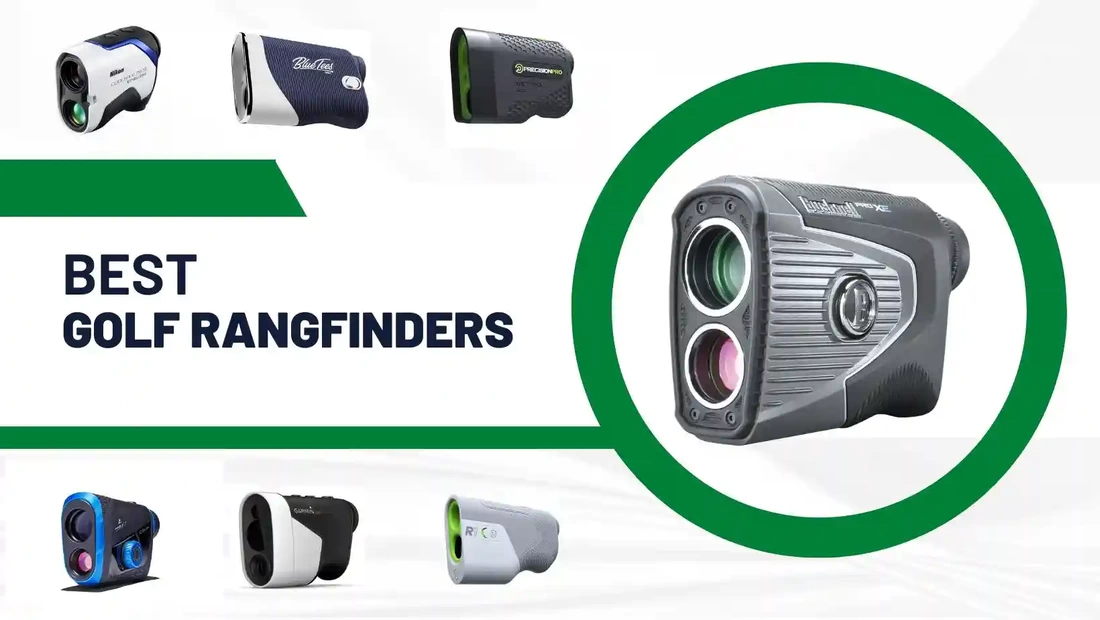
In 2026, the question isn’t just “how far is the pin?” but “how much is the wind affecting my 7-iron?” Rangefinder technology has hit a fever pitch this year. We’ve moved past simple lasers into an era of “connected caddies” that sync with your phone, your watch, and even your launch monitor. Check out our review of the best golf rangefinders.
With so many options available to you, let us break down what you need to know to make the right choice for you. We’ll start with a simple table of our top pics and progress into more detailed reviews and considerations to help you make the best choice.
2026 Comparison Matrix
Below is a detailed comparison of the top 10 models.
| Model | Magnification | Range (Yds) | Accuracy | Slope Tech | Battery | Price (Est.) |
|---|---|---|---|---|---|---|
| Bushnell Pro X3+ LINK | 7x | 1,300+ | ± 0.5 yd | Yes + Wind | CR2 | $599 |
| Shot Scope PRO ZR | 6x | 1,500+ | ± 1.0 yd | Yes | CR2 | $299 |
| Nikon COOLSHOT PROIII | 6x | 1,200+ | ± 0.75 yd | Stabilized | CR2 | $449 |
| Garmin Approach Z30 | 6x | 1,300+ | ± 1.0 yd | GPS Overlay | CR2 | $399 |
| Bushnell Tour V7 Shift | 6x | 1,300+ | ± 1.0 yd | Yes | CR2 | $399 |
| Bushnell A1-Slope | 6x | 1,300+ | ± 1.0 yd | Yes | USB-C | $249 |
| Cobalt Q6 Slope | 7x | 2,000+ | ± 0.1 yd | Yes | CR2 | $450 |
| Blue Tees Series 3 Max+ | 7x | 900+ | ± 1.0 yd | Yes | CR2 | $199 |
| Precision Pro NX10 | 6x | 900+ | ± 1.0 yd | Yes | CR2 | $279 |
| WOSPORTS L16 | 6x | 800+ | ± 1.0 yd | Yes | CR2 | $129 |
1. Best Overall: Bushnell Pro X3+ LINK
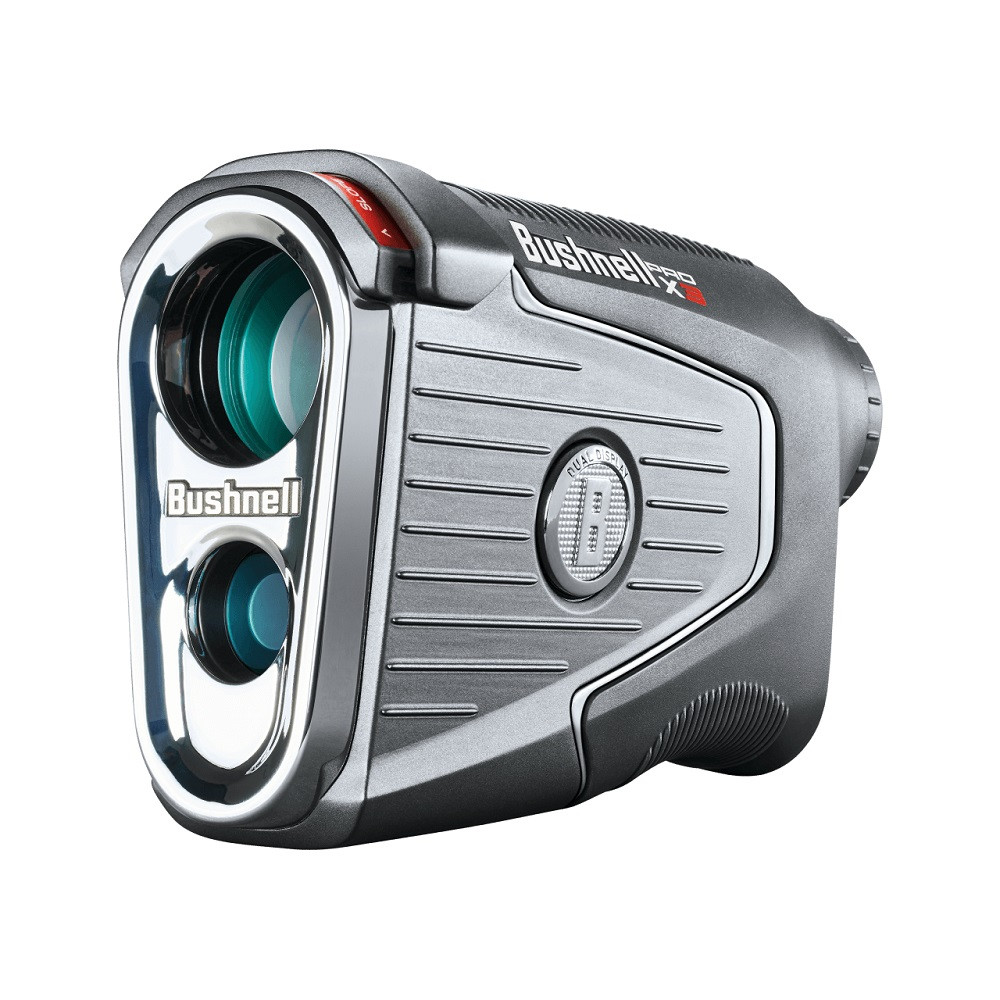
Bushnell remains the gold standard for a reason. The Pro X3+ LINK is the “Taj Mahal” of lasers. The LINK technology allows the device to pull real-time wind speed and direction data from the Bushnell app. If you play on coastal courses or in the windy Midwest, this is the only device you need.
- Why it wins: It doesn’t just give yardage; it pulls live wind speed and direction data from the Bushnell app and displays it in the viewfinder.
- The Vibe: For the golfer who wants every possible advantage and isn’t afraid to pay for it.
2. Best Value for Performance: Shot Scope PRO ZR
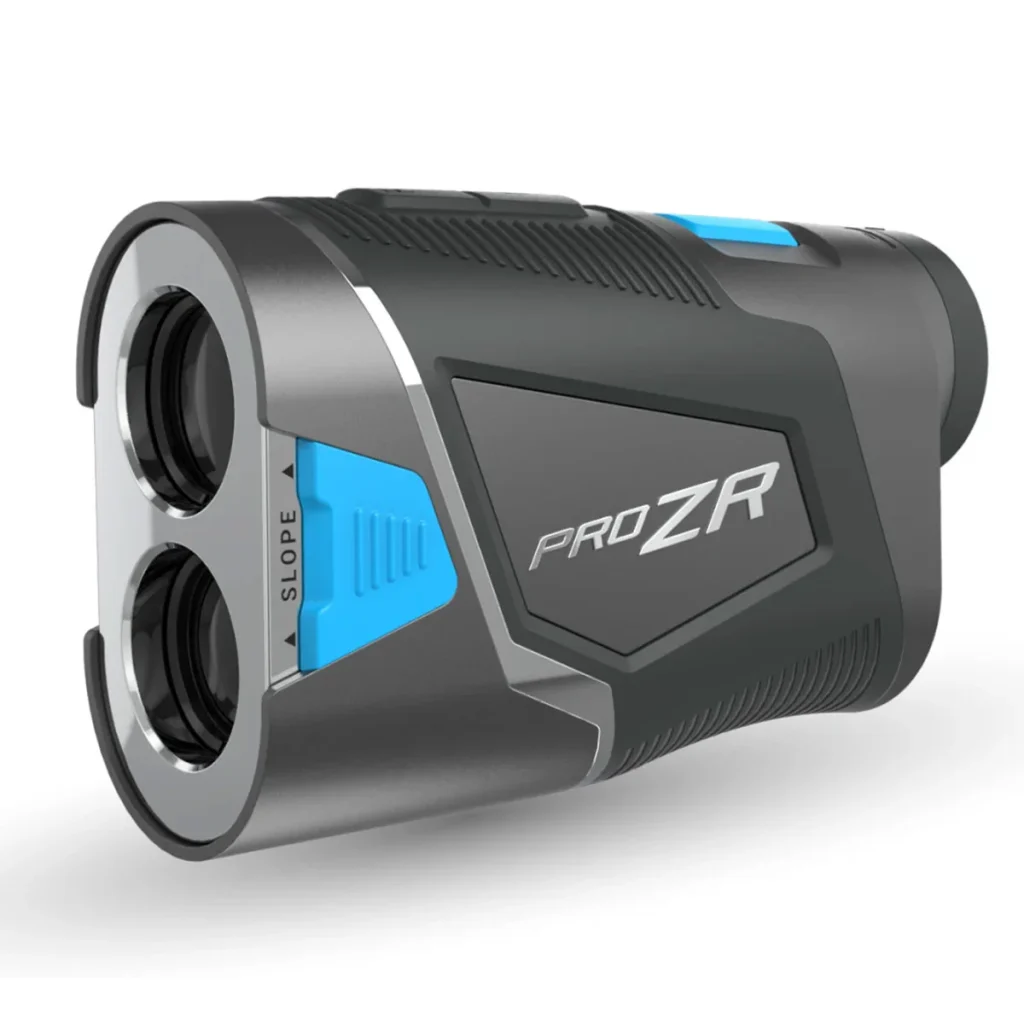
If you want premium build quality without the $600 price tag, the PRO ZR is the sleeper hit of 2026. Shot Scope has disrupted the market by offering a fully metallic, premium-build rangefinder for under $300. Its target acquisition is lightning fast, and it feels significantly more expensive than it is.
- Why it wins: It features a full metal construction (rare at this price) and a “Target Lock” vibration that is arguably the fastest in the game.
- The Vibe: High-end feel for the pragmatic golfer who spends his savings on extra rounds.
3. Best for Shaky Hands: Nikon COOLSHOT PROIII Stabilized
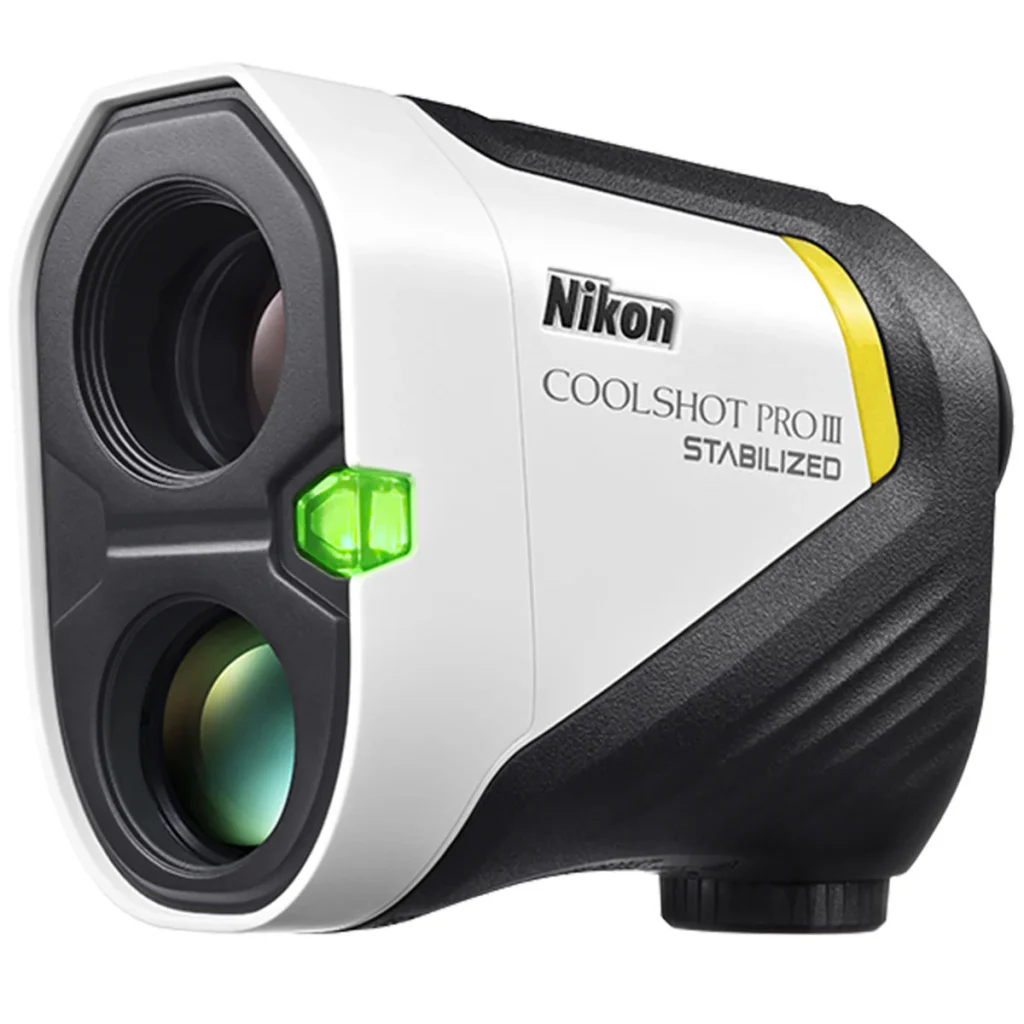
Still the gold standard for golfers who struggle with steady hands. The active stabilization is mechanical, meaning the image actually “freezes” in the viewfinder. It’s the closest thing to magic on the golf course.
- Why it wins: Its active stabilization reduces viewfinder vibration by roughly 80%. It’s like having a gimbal for your eyeballs.
- The Vibe: Pure relief. No more “zapping” the trees behind the green five times.
4. Best High-Tech Hybrid: Garmin Approach Z30
For the Garmin loyalist, the Z30 is a dream. It syncs with your Garmin watch to show a “Laser Range Arc” on the watch face, showing exactly what you’ve zapped. Garmin has finally cracked the code on the “Connected Ecosystem.”
- Why it wins: If you use a Garmin watch, the Z30 sends the laser distance to your wrist. In the viewfinder, you get a full GPS map of the green overlayed on the laser image.
- The Vibe: For the tech-forward golfer who wants a “digital caddie” experience.
5. Best Mid-Range: Bushnell Tour V7 Shift
Launched early this year, the V7 Shift brings “flagship” tech down to the $400 range. Reliability is the keyword here. The V7 Shift improves on the V6 with a sharper OLED display and better ergonomics. It’s the most common rangefinder you’ll see in local USGA qualifiers.
- Why it wins: It introduces “Yardage Range Recall” and a dual-color OLED display that stays crisp even in the brutal Florida or Arizona sun.
- The Vibe: The reliable daily driver for 90% of golfers.
6. Best Compact/Pocket: Bushnell A1-Slope
Rangefinders used to be bulky; the A1-Slope is roughly the size of a deck of cards. About the size of a business card, this is for the walker. It disappears into a pocket and uses USB-C charging, so you can top it off in the car on the way to the course.
- Why it wins: It’s USB-C rechargeable (no more hunting for CR2 batteries at the pro shop) and fits comfortably in your pocket if you prefer to walk the course.
- The Vibe: Minimalist, sleek, and surprisingly powerful.
7. Most Accurate: Cobalt Q6 Slope
The Cobalt Q6 is the “benchmark” tool and for accuracy nerds. Cobalt doesn’t do flashy marketing, but they do incredible glass. The Q6 is accurate to $0.1$ of a yard—a stat that matters when you’re trying to land a wedge on a specific tier of the green.
- Why it wins: It’s built like a piece of military hardware. The dial for brightness is physical (no menus!), and the consistency is unmatched.
- The Vibe: For the “data geek” who needs to know exactly which club to pull.
8. Best Under $200: Blue Tees Series 3 Max+
Blue Tees won the “cool” factor years ago, and the 3 Max+ continues that legacy. With a magnetic mount that could hold onto a cart in a hurricane and a design that looks great in any bag, Blue Tees is the choice for the 18-35 demographic who values aesthetic as much as performance.
- Why it wins: It looks better than any other unit on the market and features an ultra-strong magnet to stick to the cart frame.
- The Vibe: The younger golfer (18-35) who wants style and functionality without the “legacy brand” markup.
9. Best Customization: Precision Pro NX10
Tired of every rangefinder being black or grey? Featuring “changeable skins,” the NX10 is for the golfer who wants to customize their gear. It’s durable, accurate, and supported by some of the best customer service in the industry.
- Why it wins: You can change the outer shell to match your bag or your favorite team. Under the hood, the optics are clear, and the slope tech is USGA-legal via a toggle.
- The Vibe: Personalization meets performance.
10. Best Budget Workhorse: WOSPORTS L16
For under $150, you might expect a toy. The L16 is anything but. If you just want to know how far it is to the bunker, the L16 is your workhorse. It lacks the premium glass of a Bushnell, but for under $150, its performance is shockingly consistent.
- Why it wins: It handles the basics—flag lock, vibration, and slope—with surprising speed.
- The Vibe: Perfect for the beginner or the “occasional” golfer who just needs a number.
What to Look For in 2026
- Slope Integration: Ensure it has a physical “off” switch for tournament play.
- Optics: Look for at least 6x magnification. In 2026, 7x is becoming the new standard for premium models.
- Connectivity: If you already use an app like Arccos or a Garmin watch, pick a rangefinder that “talks” to your existing gear.
Final Verdict
When shopping for a rangefinder in 2026, prioritize Magnification and Locking Speed. Most units now include slope technology, so ensure you have a model with a visible “Slope-Off” indicator to stay legal during tournament rounds.
If money is no object, the Bushnell Pro X3+ is the best device ever made. However, for the average US golfer looking for the best “bang for buck,” the Shot Scope PRO ZR or the Bushnell Tour V7 are the smartest buys this season.