If you’re about to drop serious money on a golf simulator, the hitting mat is the piece that will either save your joints or wreck them and make your swing lie to you. Good golf hitting mats have to feel close to real turf, protect your body on concrete floors, and hold up to thousands of swings without getting lumpy.
Over the last few seasons I’ve hit thousands of shots on the most popular simulator mats—Fiberbuilt, SIGPRO, Carl’s HotShot, Country Club Elite, EZ Tee, Dura‑Pro and more—plus gathered feedback from a big community of home sim golfers on what they actually kept long term. The picks below are built for real home setups: garages, basements, and spare rooms where space, ceiling height, and budget all matter.
Golf Mat Buyer Satisfaction Survey Data
Note: The models and ratings below are from our golf mat buyer satisfaction survey on Reddit. Ratings are on a 1-10 scale with 10 being the best score. Just over 300 buyers participated in the survey.
| Row Labels | 5×5 Starting Price | Realistic Feel | Shock Absorption | Durability | Easy to Store | Sliding | Use on Concrete | Leave Residue | Take a Real Tee | Absolutely | Likely |
|---|---|---|---|---|---|---|---|---|---|---|---|
| Sigpro | $550 | 8.1 | 8.9 | 6.2 | 9.1 | 8.4 | 9.1 | 0.7 | Yes | 65% | 90% |
| Fiberbuilt | $1,200 | 7.8 | 9.3 | 7.6 | 5.9 | 9.2 | 9.4 | 0.8 | Yes | 73% | 91% |
| Carl’s place | $500 | 8.2 | 7.9 | 8.1 | 6.3 | 7.8 | 9 | 0.6 | Yes | 78% | 88% |
| Bullseye Golf | $850 | 8.4 | 7.9 | 8.2 | 6.4 | 8.4 | 7.8 | 0.6 | Yes | 79% | 79% |
| EZ-Tee Hybrid | $425 | 8.1 | 8 | 8.7 | 5.7 | 7.6 | 7.7 | 0.6 | Yes | 57% | 86% |
| Gung Ho Holy Grail | $749 | 7.8 | 8.4 | 6.7 | 6 | 8.3 | 8.6 | 1 | No | 18% | 76% |
| Matzilla | $330 | 7.3 | 7.8 | 8.3 | 6.9 | 8.6 | 5.7 | 0.5 | Yes | 68% | 100% |
| TrueStrike | $1,100 | 6.3 | 5.3 | 6.3 | 5 | 8.7 | 9.7 | 0.6 | Yes | 37% | 69% |
| Country Club Elite | $599 | 5.6 | 6 | 7.4 | 8 | 6.2 | 6.8 | 0.6 | Yes | 14% | 14% |
| Monster Mat | $419 | 7.2 | 6.5 | 6.7 | 7 | 6.1 | 5.9 | 0.7 | Yes | 48% | 64% |
| Go Sports | $199 | 5 | 6 | 5 | 5.3 | 1.8 | 5.8 | 0.5 | No | 12% | 46% |
| DuraPro | $326 | 5 | 2 | 10 | 1 | 5 | 0.7 | Yes | 0% | 0% | |
Best Golf Hitting Mats by Budget and Setup
If you just want the short list, start here and then read the detailed reviews to confirm fit for your room and budget.
- Best overall for most home simulators: A mid‑thickness, joint‑friendly mat with a replaceable hitting strip (think SIGPRO Softy or Carl’s HotShot‑style design).
- Best feel for better players: A firmer “fairway-like” mat like Fiberbuilt Player Preferred or TrueStrike that really punishes fat shots.
- Best joint-friendly mat for concrete: A mat with a softer strike layer or gel insert that takes the sting out of steep swings on hard floors.
- Best budget mat under roughly $200: A durable residential mat similar to DURA‑PRO that beats cheap Amazon turf without getting close to premium prices.
- Best outdoor/backyard mat: A weather‑tolerant mat that can be staked or weighted down and paired with a net for backyard practice.
- Best compact mat for small rooms: A 4×5‑ish mat or centered hitting strip layout that still gives you a full stance without eating the whole garage bay.
If you’re building the whole sim, you’ll also want to match your mat with the right net and enclosure—check out Yardstick’s golf net and garage simulator guides so your mat dimensions match your hitting area and screen.
How to Choose the Right Golf Hitting Mat for Your Space

Step 1 – Confirm Room Size and Ceiling Height
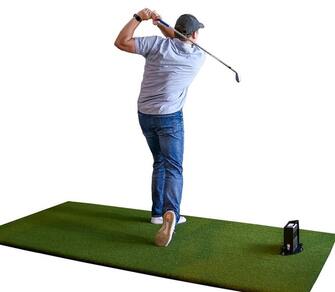
Before you worry about the turf fibers on golf hitting mats, make sure your room can actually fit the mat shape you’re eyeing. For most single‑bay setups you’ll want at least a 5 foot wide hitting area and around 6–10 feet of depth from ball to screen or net, with 9–10 feet of ceiling height for drivers.
If you have both right‑ and left‑handed golfers, a 4×9 or 5×9 style mat with a centered hitting strip makes life much easier than sliding a smaller mat back and forth. In tight basements and garages, you can combine a smaller hitting mat with separate stance turf panels so you still have level footing without overfilling the bay.
Step 2 – Decide How You’ll Use the Mat
Your golf hitting mat needs are very different if you’re pounding drivers into a projector screen five nights a week versus chipping in the backyard with the kids. Simulator‑heavy use favors larger, thicker mats with stance area and integrated hitting strips, while casual practice can get away with a smaller residential pad plus a basic net.
If you have a launch monitor that sits level with the ball—like many radar and camera systems—look for a mat that either has an integrated strip you can align to the device or enough width to keep both on the same surface height. That avoids weird reads and protects your gear from mis‑hits.
Step 3 – Prioritize Feel vs Joint Protection vs Durability
All mats live on a spectrum: softer mats are easier on joints but can hide fat shots, while firmer mats give truer contact feedback but can feel harsh on elbows and wrists, especially on concrete. The best modern simulator mats aim for a “soft‑on‑impact but still punishes heavy shots” balance.
Durability matters too—good mats can survive hundreds of thousands of strikes in the same area, especially when they use replaceable hitting strips or specialized fibers like Fiberbuilt’s Grass or Player Preferred series. If you’re hitting daily, avoid bargain turf that gets hard spots or wear channels after a few weeks.
Best Overall Mat for Most Home Simulators
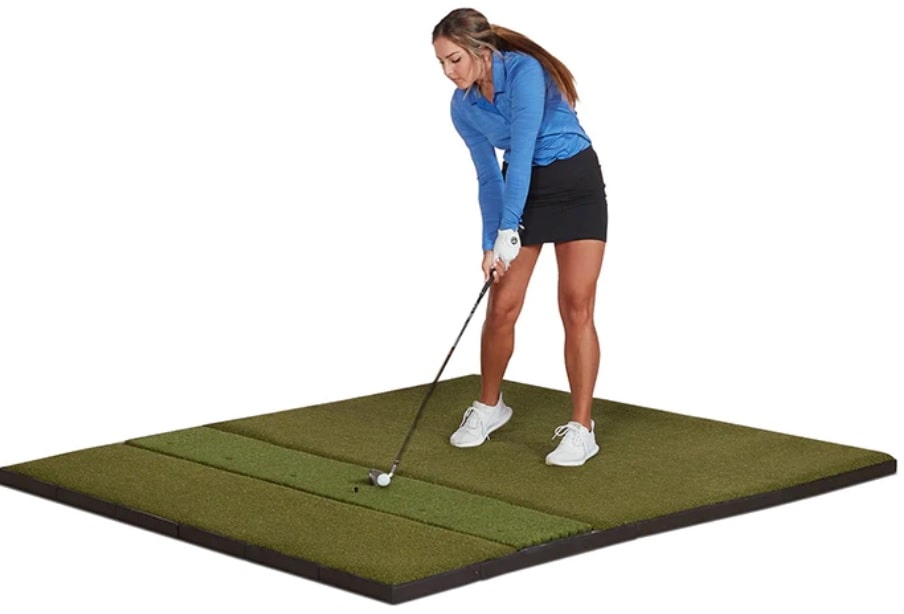
For most home golfers, the sweet spot is a mid‑thickness mat with a softer hitting strip and firm stance area—similar in concept to SIGPRO Softy or Carl’s HotShot with a gel insert. These mats give you enough “give” at impact to protect joints while still letting you feel when you get steep or heavy with the club.
Look for a 4×7 to 4×9 size option if you have a standard garage bay, and check that the mat supports real tees plus a replaceable hitting strip so you’re not replacing a whole mat when the center wears out. On concrete or wood, a non‑skid base is a big plus; you don’t want the mat sliding around when you go after driver.
Best for: Most home sim builders who want a single mat that works for irons and driver, with good joint protection on harder floors.
Best Feel and Realism for Serious Golfers
If you’re a better player and care more about “how close is this to hitting off fairway turf” than about maximum softness, look at mats in the Fiberbuilt Player Preferred or TrueStrike class. These use firmer strike surfaces and engineered inserts to reproduce that ball‑then‑turf sensation and really punish fat shots instead of letting the club slide.
This style of mat is excellent if you’re grinding on swing changes and want what you do indoors to translate cleanly to the course, but some golfers with existing elbow or wrist issues may find them a bit demanding for marathon sessions. They shine in dedicated sim rooms where you’re serious about scoring and don’t mind investing in top‑tier gear.
Best for: Lower‑handicap players and gear junkies building a long‑term simulator bay.
Best Joint-Friendly Mat for Concrete Floors
If your sim is going on bare concrete—and that’s most garages—you’ll want a mat designed specifically to soak up shock. Gel‑insert mats and very soft “Super Softy” style strike surfaces do a fantastic job here: the club glides through the turf and the base compresses instead of your wrists taking the full hit.
These are especially good for steeper swings and older golfers, or anyone who’s had elbow or shoulder issues. The tradeoff is that if the surface is too soft you can get away with slightly fat shots that would be punished on grass, so pair a cushioned mat with some on‑course awareness to make sure your contact still holds up outside.
Best for: Garage setups on hard floors, steeper swingers, and golfers with existing joint concerns.
Best Budget Golf Hitting Mat (Under ~$200)
If you just want something decent to hit balls off without spending simulator money, a solid residential‑grade mat—similar to GoSports better options—is the way to go. These mats won’t match the feel or durability of Fiberbuilt‑type products, but they’re far better than thin, spiky turf pads that hurt and wear out in a month.
Focus on size (4×5 or larger), mat weight so it doesn’t flip, and enough pile depth that irons don’t bottom out on hard backing. For heavy sim use you’ll eventually want to upgrade, but for chipping in the yard or occasional garage sessions, a good budget mat can be money well spent.
Best for: Newer golfers, renters, and anyone testing the waters before committing to a full sim build.
Best Outdoor / Backyard Golf Mat
Outdoor‑focused mats trade a little simulator polish for ruggedness. Good ones use UV‑resistant turf, drainage‑friendly backing, and enough heft to sit flat on pavers or grass without curling. Many also pair well with simple backyard nets, giving you a low‑pressure way to work on wedges and mid‑irons.
Add sandbags, stakes, or non‑skid pads if you’re placing the mat on slippery decks or sloped lawns. If you’re planning to leave a mat outside year‑round, make sure the manufacturer actually rates it for outdoor use—some premium simulator mats are meant for indoor bays only and can break down faster in sun and weather.
Best for: Backyard practice with a net, family‑friendly setups, and golfers who don’t have space for a permanent indoor bay.
Best Compact Mat for Small Rooms or Shared Spaces
When your “sim room” is a single garage stall or a tight basement, a full 5×10 mat can be overkill. Compact mats around 4×5 or a narrow hitting strip paired with separate stance turf give you enough space to swing without wasting square footage.
For shared right/left use in small spaces, consider centering the hitting area and adding thin stance panels to either side so both golfers stand level with the ball. Keep mat thickness modest in low‑ceiling rooms to preserve swing height, especially if you’re tall or plan to hit lots of drivers.
Best for: One‑car garages, basements with tight dimensions, and multipurpose rooms.
Key Features That Actually Matter (And What to Ignore)
Mat Size, Stance Area, and Lefty/Righty Setups
For a right‑handed golfer only, a 4×5 or 5×5 mat can be enough—just make sure you have room to adjust ball position for wedges through driver. If you’ve got both righties and lefties in the house, a longer 4×9 layout or center‑strip design makes it easy to share one bay without rebuilding your floor every session.
Don’t forget the transition from mat to surrounding floor: if your mat is thick, add stance turf or foam tiles around it so you’re not stepping on and off a raised platform between shots. That makes the space feel more finished and protects ankles and knees.
Turf Height, “Dig,” and Fat Shot Punishment
Mats with long, brushy fibers can feel great and be very soft on impact, but if they’re too forgiving you can get away with fat shots that would be punished on real turf. Firmer surfaces or engineered inserts are less comfortable on mishits but better at telling the truth about your contact.
Think about your swing: steep players often do better with more give or a gel layer to avoid injury, but they still need enough resistance to know when they’re digging. Shallow players can comfortably use firmer Tour‑style surfaces without as much joint risk.
Underlay, Noise, and Protecting Your Subfloor
On concrete or tile, the mat’s base is almost as important as the turf. A heavy rubber backing or added foam underlay can dramatically cut impact noise and keep your joints from absorbing every bit of the shock.
If you’re in a basement or upstairs room with family below, sound‑absorbing layers under and around the mat help keep the peace. Interlocking gym tiles or dense foam panels are simple ways to deaden sound while leveling the floor.
Tees, Alignment Lines, and Training Features
Real‑tee compatibility is a genuine plus if you care about driver practice, since hard rubber tees rarely feel like the course. Many modern sim mats are designed to accept normal wood or plastic tees without tearing up the surface.
Alignment lines and strike‑feedback coatings can be useful for some golfers, but they’re not mandatory. You can always add alignment sticks or spray‑footed impact tape if you want visual feedback without locking yourself into a gimmicky surface.
Golf Hitting Mats for Different Room Types
Garage Golf Simulator Mats
Garages are the most common home sim location and also the hardest on your body because of concrete floors. Aim for mats with strong shock absorption and consider adding a rubber or foam base layer beneath to reduce vibration.
If you’re pairing a mat with a full enclosure and impact screen, make sure the mat length works with your launch monitor’s required ball‑to‑screen distance, and leave enough depth behind the ball for your radar unit if you’re using one. Yardstick’s garage simulator guide walks through sample layouts that show where the mat should sit relative to the screen and projector.
Basement and Spare Room Mats
Basements usually have better sound isolation but tighter ceilings. A lower‑profile mat (or a hitting strip recessed into a raised platform) can preserve precious inches of swing height so you’re not scared to hit driver indoors.
Pay attention to moisture if your basement isn’t fully dry; choose mats with solid backing and avoid leaving bare foam on damp concrete. You can extend hitting mats with roll‑out putting or stance turf to make the whole room feel like a mini indoor range.
Backyard and Outdoor Setups
If you’re hitting outside, look for mats that are specifically rated for outdoor use, with UV‑stable fibers and backing that won’t break down when it gets wet. Combine them with a sturdy net so you’re not chasing balls into neighbors’ yards—Yardstick’s golf nets guide covers good options that pair well with backyard mats.
Anchoring is key: use stakes, sandbags, or rubber edging to keep the mat from creeping forward as you hit. If the mat will live outdoors full‑time, a simple cover or storage shed will extend its life significantly.
FAQs – Real-World Mat Questions from Home Golfers
Are golf hitting mats bad for your joints or clubs?
Bad mats can be; good mats shouldn’t be. Very thin or rock‑hard mats transfer most of the impact shock into your wrists and elbows, especially on concrete, which is why joint‑friendly designs and underlay matter.
On the club side, repeated hits off very abrasive turf can wear soles and leading edges faster than natural grass, but modern simulator‑grade mats are designed to be relatively gentle on equipment. If you feel pain during or after practice, that’s a sign to upgrade your mat or add more cushioning underneath.
What size golf mat do I need for a simulator?
For a typical single‑user sim, a 4×7 or 5×7 mat gives enough room for stance and ball position without taking over the room. If you’re sharing the bay with left‑handed golfers, a 4×9 or center‑strip layout makes it easier to switch sides.
Radar‑based launch monitors may require extra depth behind the ball, so check your device’s manual and make sure your mat layout leaves space where the unit expects to sit. When in doubt, plan your hitting position inside your enclosure first, then choose a mat that comfortably fills that footprint.
Is it easier or harder to hit off a mat than grass?
Most golfers find it a little easier to hit off forgiving mats because the club can skid through instead of digging, especially on slightly fat shots. Firmer “fairway‑like” mats narrow that gap, but no indoor surface is perfectly identical to real turf.
The goal is to pick a mat that doesn’t flatter your contact too much so what you see on the sim matches your on‑course results. If you notice you’re striping it indoors and struggling outside, your mat may be too soft or too forgiving for your swing.
How long should a good golf mat last?
A true simulator‑grade mat should last many seasons of home use, especially if it has a replaceable hitting strip that takes the brunt of the wear. Brands like Fiberbuilt even publish shot‑count estimates for their mats, often in the hundreds of thousands.
Cheaper mats may start to show grooves, hard spots, or shedding after a few months of heavy practice. Rotating the mat or hitting off different sections can stretch its life, but if you see the backing through the turf or feel harsh impact, it’s time to replace.
Do I need a special mat for my launch monitor?
You don’t need a proprietary mat, but you do need one that works with your launch monitor’s preferred setup. Some ceiling or radar units perform best when the ball and stance area sit on a relatively dark, non‑reflective surface of consistent height.
If your monitor sits on the floor behind or beside you, make sure the mat layout gives it a stable, level spot at the correct distance from the ball. Many golfers choose mats with built‑in hitting strips aligned to their launch monitor’s tracking zone for repeatable readings.
Can I build my own DIY golf hitting mat?
Yes, many golfers build DIY mats using turf, foam, and plywood, especially for budget garage or backyard setups. The key is layering enough shock‑absorbing material so the surface isn’t effectively “turf over concrete,” which can be rough on joints.
You can also combine a commercial hitting strip from a premium mat with your own stance platform for a hybrid solution that feels good at impact but costs less than a full sim mat. Just take your time leveling everything so you’re not swinging from uneven surfaces.

This website is a participant in the Amazon Services LLC Associates Program, an affiliate advertising program designed to provide a way for websites to earn advertising revenues by advertising and linking to Amazon.com. Some of the links on this page are affiliate links. This means that, at zero cost to you, I will earn an affiliate commission if you click through the link and finalize a purchase.