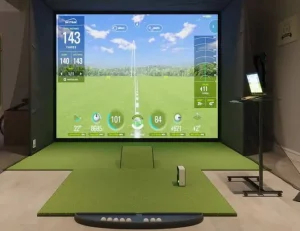
There is no sound quite like a flushed 7-iron. But when that sound is happening at 11:30 PM in a garage directly below your kid’s bedroom, it stops being “pure” and starts being a problem. If you’re trying to keep the peace at home, you need to understand that golf simulator sound proofing isn’t just about the screen. It’s about managing vibrations, air pockets, and the “drum effect” of your enclosure.
When I built my first setup, I spent all my time worrying about whether my Square Launch Monitor would pick up my spin axis correctly. I didn’t spend a second thinking about the “thwack.” Then I hit my first driver. It sounded like a cannon going off in a library. My wife was thrilled, as you can imagine.
After scouring the forums on r/Golfsimulator and testing a few DIY hacks myself, here is the exhaustive guide on how to actually quiet things down.
The Three Sources of Simulator Noise
Before you start throwing foam at the walls, you have to identify what is actually making the noise. It usually breaks down into three categories:
- The Impact: The club hitting the ball and then the ball hitting the screen (The “Crack”).
- The Floor: The vibration of the ball hitting the floor or the club hitting the mat (The “Thud”).
- The Room: Echo and reverberation off hard drywall, floors, or garage doors.
Screen Noise Reduction: Killing the “Gunshot”
The impact screen is your biggest speaker. If it’s pulled tight like a drum, it’s going to sound like one. Here are the best ways to reduce golf simulator screen noise:
1. Upgrade the Screen Material
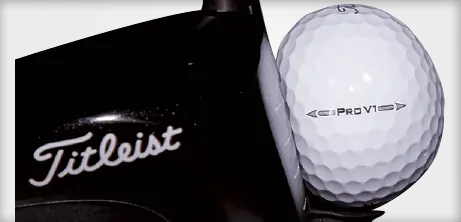
Honestly, this is the biggest “buy once, cry once” moment in a sim build. I’ve seen guys go from a cheap Amazon mesh screen to a Carl’s Place Premium or a SIGPRO screen, and the difference is night and day. As one Redditor put it, it goes from sounding like a gunshot to hitting into a “big pillow.” High-quality, multi-layer screens are designed to “burp” air out the sides rather than vibrating like a thin sheet.

2. The “Moving Blanket” Hack
If you already have a screen and don’t want to drop $600 on a new one, go to Harbor Freight and buy two heavy-duty moving blankets. Hang them about 2-3 inches behind your impact screen. This acts as a massive sound absorber that catches the “snap” of the ball before it can echo off the back wall.
3. Memory Foam Backing
For those with serious noise complaints from neighbors or spouses, some users have had success using a foam memory topper behind the screen. It works incredibly well for dampening, though keep an eye on it—over time, high-speed ball strikes can start to chew through the foam if it isn’t protected by a layer of netting or a moving blanket.
Room Soundproofing: Absorbing the Echo
Even if your screen is quiet, the sound of the club hitting the ball still travels. You need to “soften” the room to stop sound waves from bouncing.
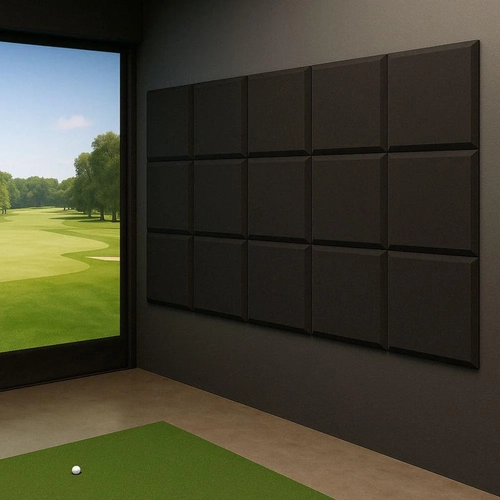
- Acoustic Tiles: Cover the ceiling directly above the hitting area with foam acoustic tiles. It’s “low-hanging fruit” that kills the immediate upward reflection.
- Garage Door Insulation: If your sim is in the garage, that metal door is basically a giant amplifier. Adding an insulation kit doesn’t just help with the temperature; it’s one of the best bets for keeping the noise from leaking onto your driveway.
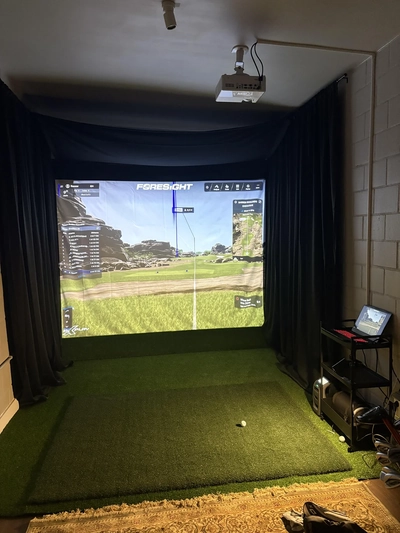
- Heavy Curtains: Don’t underestimate the power of “soft furnishings.” Hanging heavy, theater-style blackout curtains along the side walls of your enclosure (or even over a block wall) will soak up mid-to-high frequency sounds.
Structural Soundproofing: The Pro Level
If you are building a dedicated room from scratch and want it truly “silent,” you have to think about the bones of the room.
The Double-Drywall Sandwich
The gold standard for high-end builds is using double layers of 5/8” drywall with a sound barrier (like Green Glue) in between. To go even further, some enthusiasts are building “room-within-a-room” setups using double-stud, air-gapped walls to completely isolate the vibration of the simulator from the rest of the house.
Rockwool and MLV
Standard fiberglass insulation is useless for sound. Use Rockwool (mineral wool) inside your walls and ceiling. It’s denser and specifically designed for fire and sound insulation. If you can afford it, adding Mass Loaded Vinyl (MLV) behind the drywall adds the necessary mass to stop low-frequency thuds from traveling through the studs.
Subtle Opinions: Where Most People Fail
Honestly, people spend way too much money on wall foam and not enough on the hitting mat. A thin, cheap mat creates a massive “crack” when the club hits the floor. Upgrading to a thick, fiber-based mat like a Fiberbuilt or EZ Tee Hybrid dampens the club-head strike significantly.
Also, check your air gaps. You can have the thickest walls in the world, but if there’s a gap under the door or an unsealed vent, the sound will find its way out. Closing those gaps is the easiest win in the book.
Summary of Best Practices
| Solution | Effort Level | Noise Reduction |
| Multi-layer Screen | Low | High |
| Moving Blankets | Low | Medium |
| Rockwool/Double Drywall | High | Maximum |
| Acoustic Ceiling Tiles | Medium | Medium |
| Foam Practice Balls | Low | Extreme (but kills the “feel”) |
If you’re playing while the family sleeps, start with the screen backing and the floor tiles. If they can still hear you through the floorboards, it’s time to talk about Rockwool.
Suggested Internal Links
- Still deciding on your setup, see our recommendations: best golf simulator enclosures
- Wall and ceiling protection: golf simulator padding
- Reducing impact screen boundback: reduce golf impact screen bounceback