There’s a conversation happening right now in golf equipment circles, and if you haven’t stumbled into it yet, you’re probably paying too much for irons.
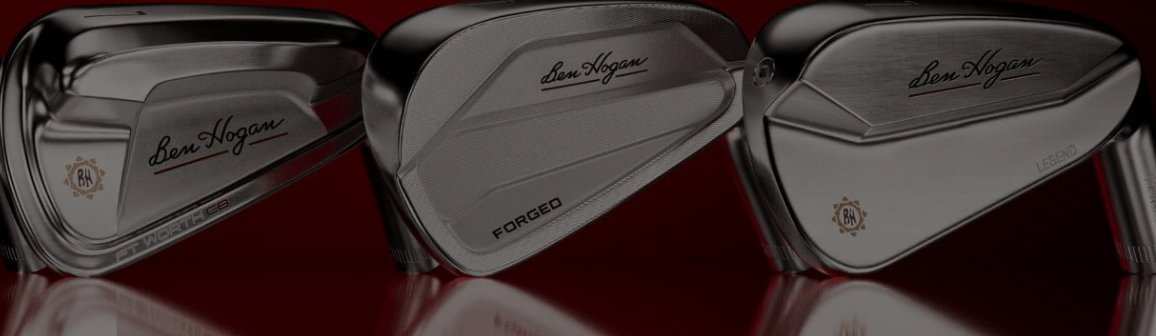
Ben Hogan Golf is back. Not just back in a nostalgia-trip, commemorative-reissue kind of way, but back with a full lineup of modern, performance-driven irons that credible reviewers are testing head-to-head against the biggest names in the game — and finding that the Hogan more than holds its own. The kicker? They cost significantly less. And yet you almost never see them discussed in the same breath as TaylorMade, Titleist, or Callaway.
That’s a problem worth examining.
The Setup: A Direct Comparison Nobody Expected
The clearest case for Ben Hogan’s underrated status comes from Plugged In Golf’s recent review of the Legend iron — the brand’s first hollow-body, foam-filled iron. Reviewer Matt Saternus didn’t just put the Legend through its paces in isolation. He tested it side-by-side against the TaylorMade P790 on a launch monitor, which is about as rigorous a comparison as you can ask for in equipment journalism.
His framing says it all: the Legend irons aspire to be the TaylorMade P790. Both are hollow-body irons with foam filling, and they carry nearly identical specs. The P790 is, by most accounts, the most commercially successful iron of the last decade — a club that defines the players-distance category. Using it as the benchmark is not a slight against Hogan. It’s the right measuring stick.
The results were close enough to be genuinely significant. On pure ball speed, the Legend was capable of matching peak numbers with anything Saternus had tested. The launch and spin profile produced high, soft-landing ball flights through most of the set — the kind of numbers that translate to greens in regulation, which is ultimately what irons are for.
Where the P790 does edge ahead is forgiveness on mishits: Saternus noted the Legend loses a measurable — though not dramatic — amount of ball speed on off-center strikes compared to its pricier rival. That’s an honest finding. But his conclusion matters more than that caveat: these irons are “more than happy to turn a small mishit into a green in regulation.” For most golfers, that’s the entire job description.
It would be easy to say that the Ben Hogan Legend irons are the poor man’s P790, but that would be selling them short. A more accurate statement might be that they’re the wise man’s P790.
Matt Saternus, Plugged In GolfThe Critical Consensus
What makes the underrated argument stick is that Plugged In Golf isn’t alone. Golf Monthly’s Joe Ferguson — a former PGA head professional who ran national fitting centers for both Titleist and TaylorMade — tested the Legend and reached a verdict that should turn heads. His summary was direct: “These irons are nothing short of outstanding.” He called out the forgiveness, the power across the face, and the sole design specifically, concluding that at the Legend’s price point, “the big boys should be a little worried.”
That’s not a throwaway compliment. Ferguson knows premium iron construction at a granular level, and when someone with that background says a direct-to-consumer iron in this price range is genuinely outstanding, it deserves more attention than it tends to get.
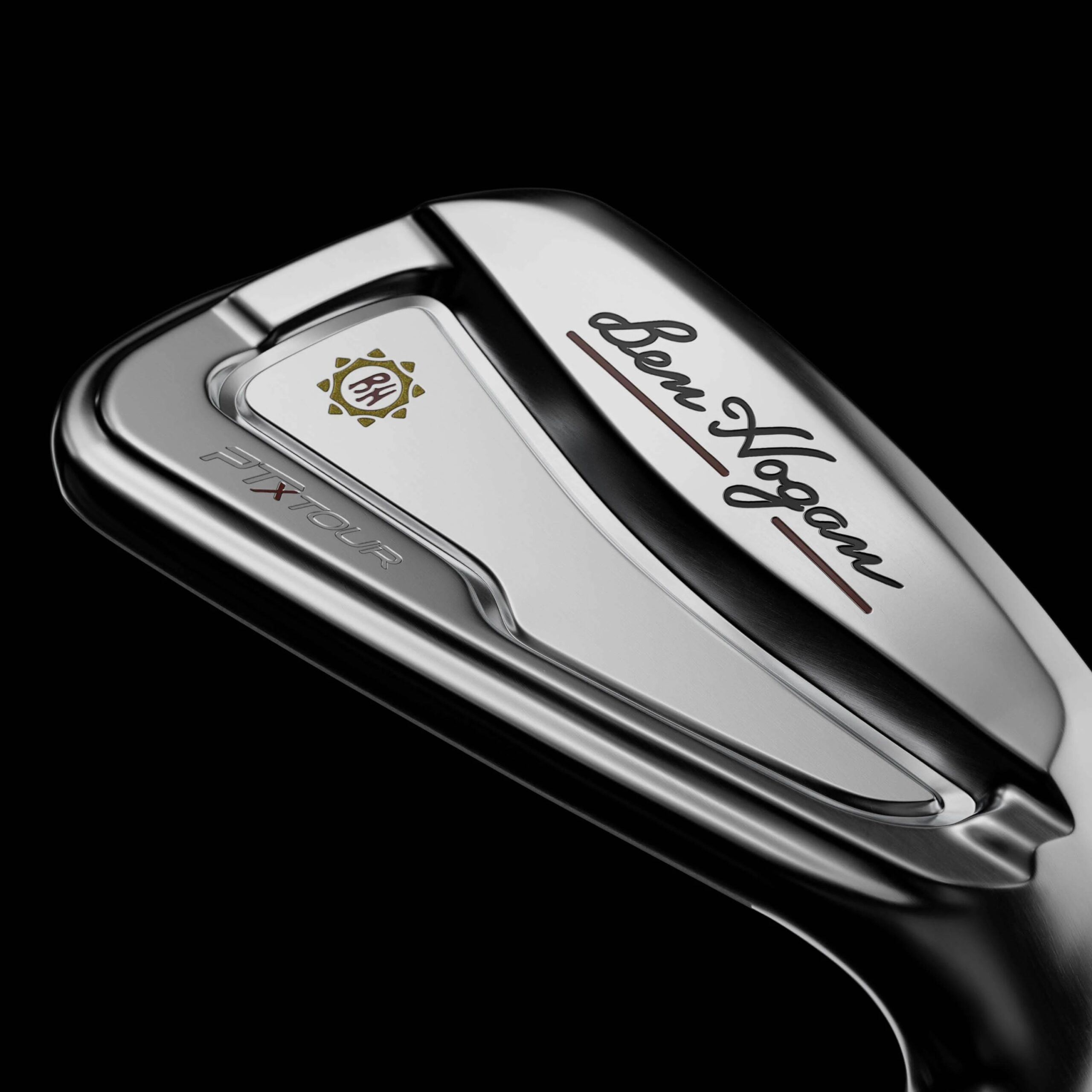
The visual has been pulled off beautifully, while all performance parameters have been comfortably fulfilled. Exceptionally forgiving, extremely powerful, and they feature one of the best sole designs on the market.
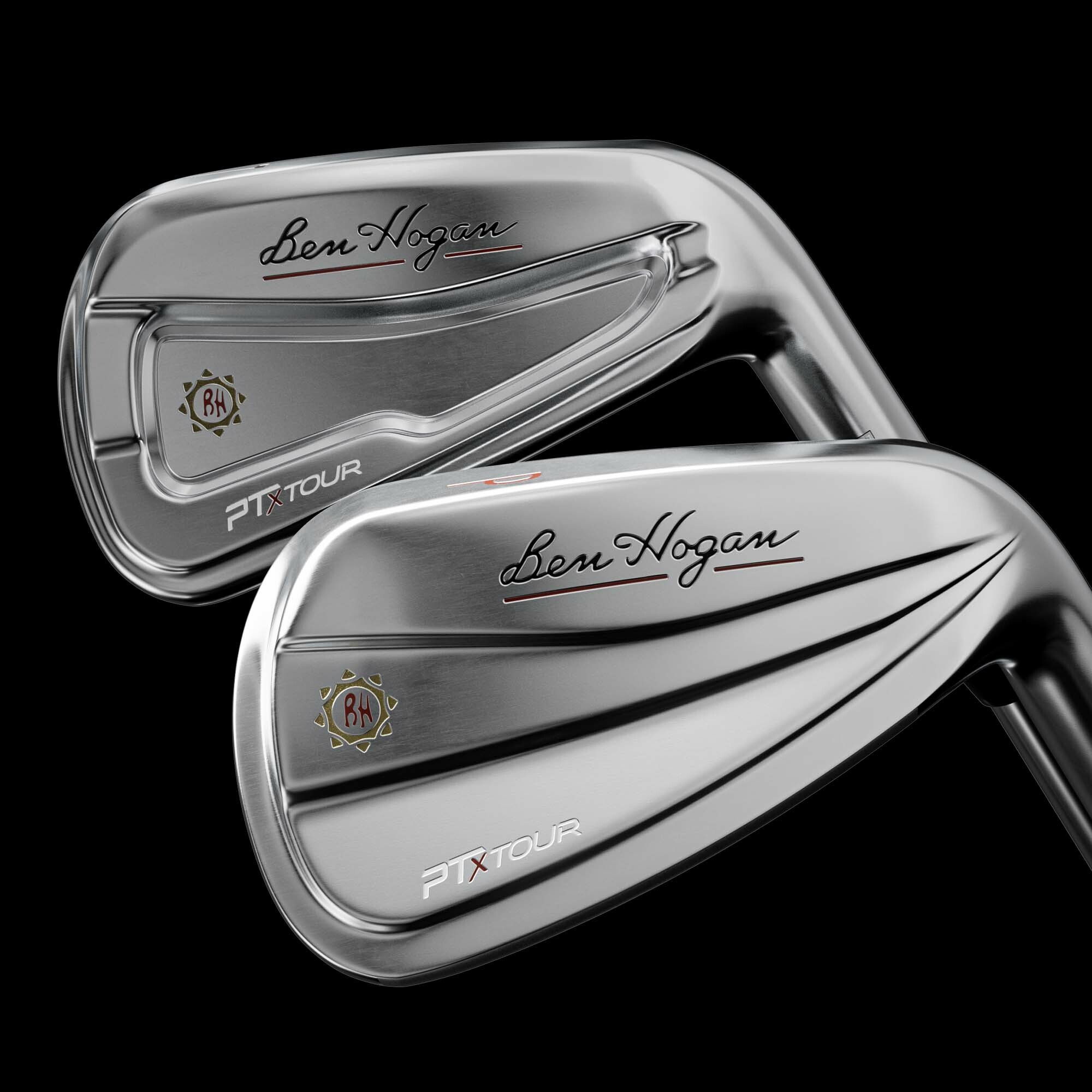
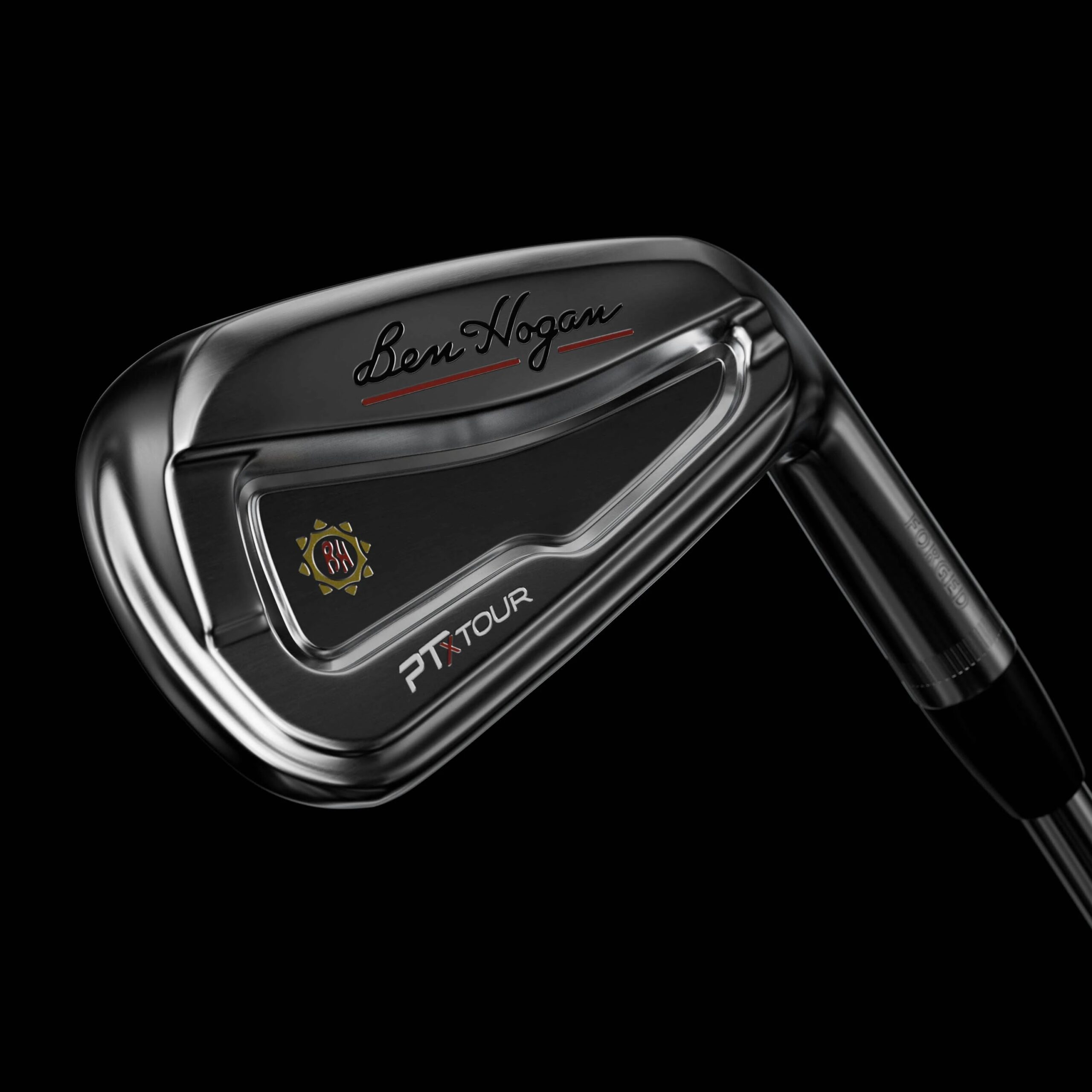
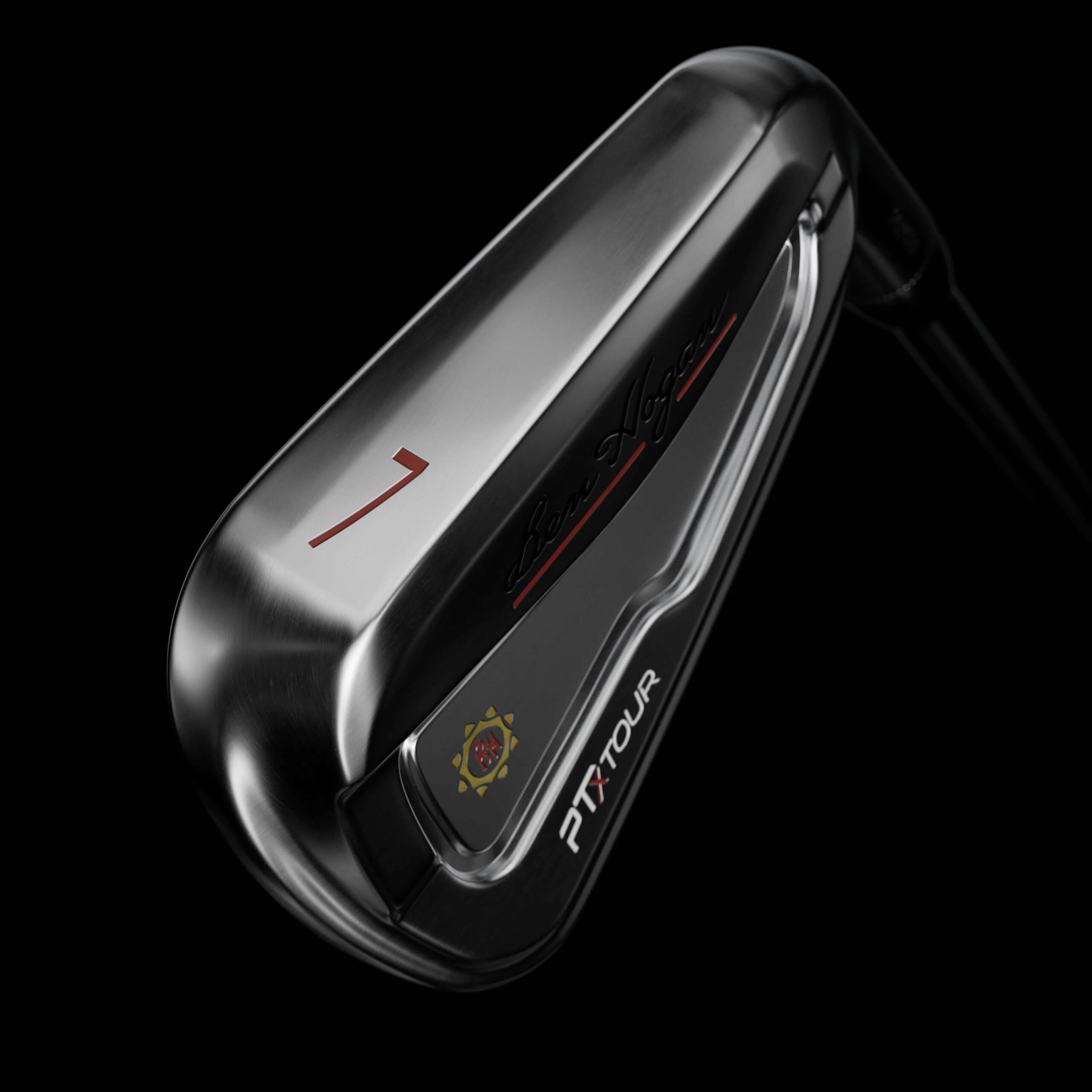
Joe Ferguson, Golf MonthlyFerguson’s PTx Tour review, also for Golf Monthly, reinforces the pattern. The PTx Tour targets the low-to-mid handicap player — a more demanding audience — and he found the ball data competitive with any comparable iron in that category. His summary on value was direct: at roughly $1,000 for a 4-PW set, it represents real value in a market where equivalent-performing irons from major OEMs routinely run $1,400 and up.
National Club Golfer’s Jack Backhouse, a self-described Ben Hogan devotee who has owned two previous sets of Hogan irons, tested the PTx Tour and noted the brand’s approach to customization as a particular standout — multiple shaft options, grip choices, and adjustable length, loft, and lie, all built around a head he described as producing great ball speeds and a feel that was solid from the face. He flagged the combo-set construction — blades in the short irons, slightly larger cavity-back heads in the mid and long irons — as a smart, practical engineering choice rather than a marketing convenience.
Why You Haven’t Heard About It
The underrated status is partly structural. Ben Hogan sells exclusively direct-to-consumer, which means no pro shop floor space, no demo days at big-box retailers, no tour staff waving them at camera angles on Sunday afternoon. The brand’s entire proposition is that cutting out the retail middleman and its associated markups allows them to deliver a better product-to-price ratio. That’s a genuine advantage for the buyer, but it comes with a visibility cost. You don’t stumble onto Hogan irons. You have to go looking.
There’s also the name itself, which creates a peculiar double bind. The Ben Hogan brand carries enough historical weight that it attracts the golfer who romanticizes classic equipment — but that same history can make modern buyers skeptical. Is this actually a performance iron, or is it trading on nostalgia? The evidence from independent reviewers suggests it’s the former, emphatically. But perception is slow to update when awareness is low.
The Honest Limitations
A fair assessment has to acknowledge the trade-offs. The Legend’s offset is more pronounced than what players-distance buyers typically expect at this level — Saternus flagged it as pushing the iron toward the game-improvement end of the spectrum, which may not suit every golfer’s eye or shot-shape preference. And while Hogan does offer custom specs through their website, the lack of a traditional fitting infrastructure means you’re largely relying on self-knowledge of your numbers.
The feedback profile is also worth noting: Golf Monthly found the Legend so forgiving it was genuinely difficult to tell when a mishit had occurred without launch monitor data. Some better players will see that as a feature. Others — particularly those who use impact feedback as a diagnostic tool — might want something that communicates more.
Golf Monthly asked whether the Legend is the most underrated iron of 2025. Plugged In Golf called it “the wise man’s P790.” Those aren’t small claims from small platforms. When two credible, independent reviewers with real testing infrastructure reach similar conclusions about a club most golfers have never seriously considered, that’s a signal worth paying attention to. If you’re shopping players-distance irons and you’re not cross-shopping Hogan, you’re leaving money on the table.
Sources
- Golf Monthly — Ben Hogan Legend Iron Review (Joe Ferguson)
- Plugged In Golf — Ben Hogan Legend Irons Review (Matt Saternus)
- Golf Monthly — Ben Hogan PTx Tour Iron Review (Joe Ferguson)
- National Club Golfer — Ben Hogan PTx Tour Irons Review (Jack Backhouse)
- Golfer Geeks — Ben Hogan PTx Pro Irons Review